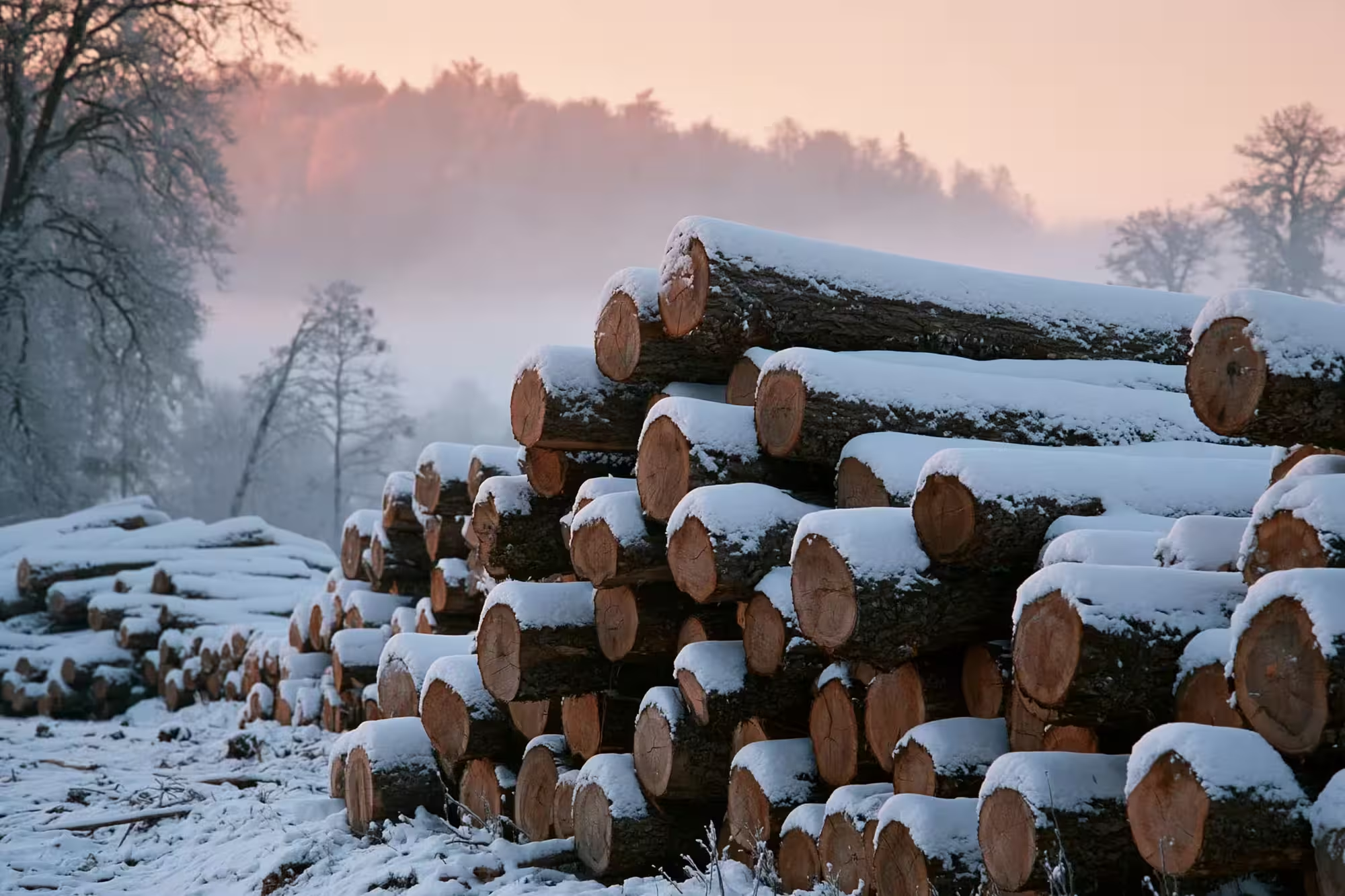
Every January, Lea and our head cabinetmaker Andrin drive out to a small sawmill in the Zürcher Oberland to choose logs. It is cold, it is early and it is the most important morning of the year, because every piece we make over the next three years will come from the wood we pick that day.
Why whole logs
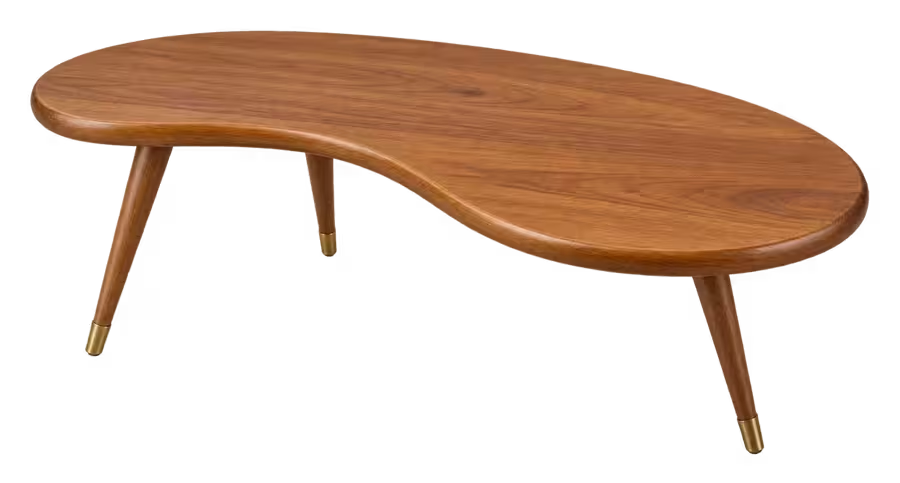
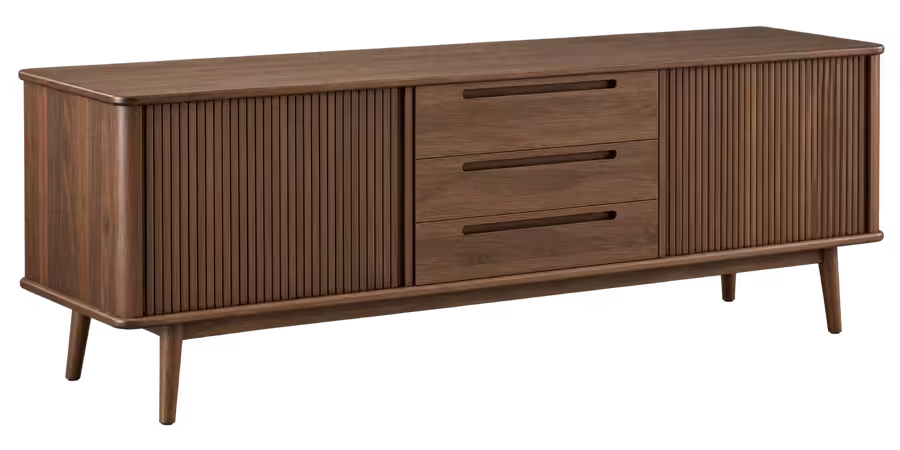
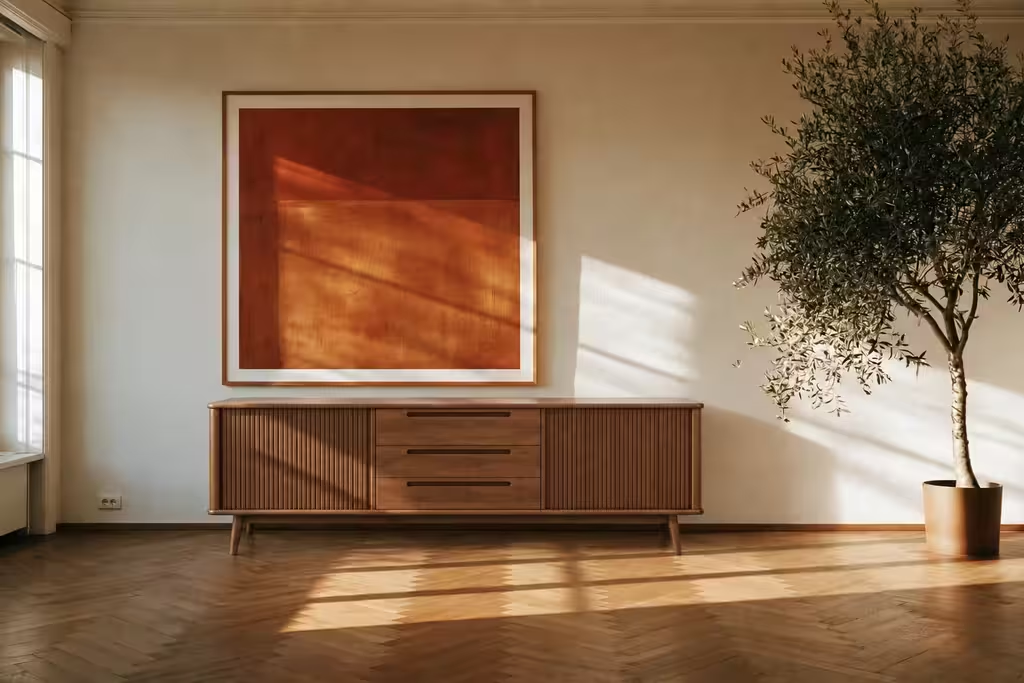
Buying boards from a timber merchant is easier. But when we buy the whole log and have it sawn in sequence, the boards stay together — like pages of a book. That is how the top of an Ellipse table can be bookmatched, and how the six drawer fronts of a Dresser No. 6 run from one grain into the next.
Why we wait
Freshly sawn wood is full of water and full of tension. Our boards dry slowly in the open air, stacked with spacer sticks under a roof, for at least one year per inch of thickness — then a few more months in the workshop so they get used to a heated room. Only then do we cut into them. It is slow, and it is the reason our tables do not crack.
You cannot rush a tree that took eighty years to grow. Two years in the yard is the least we can give it.
Lea Kern
Heartwood only
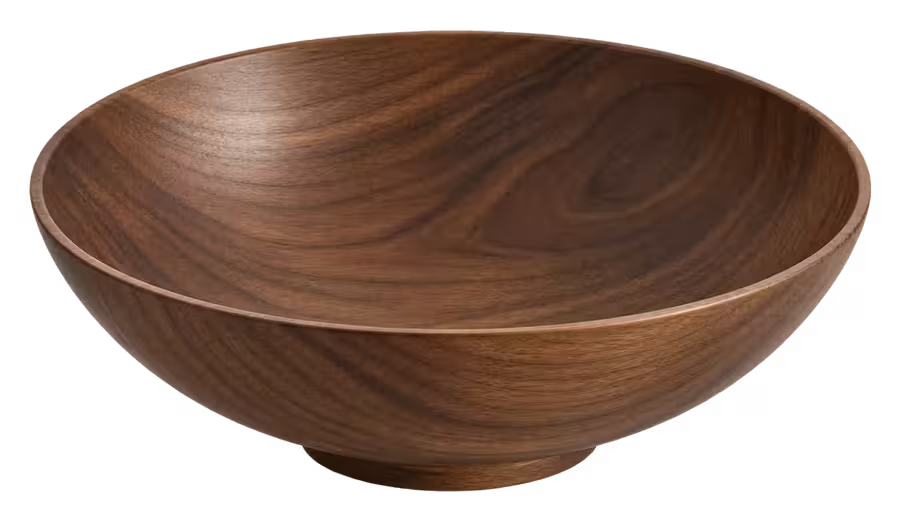
The name Kern comes from Kernholz — heartwood, the dense, dark centre of the trunk. Sapwood, the pale outer rings, is softer and more prone to movement, so it becomes bowls, trays and kindling. Our furniture is made from the heart.